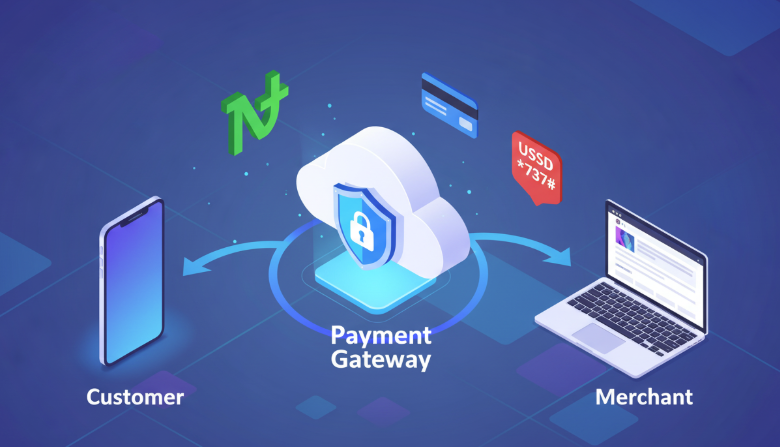
The Gateway to Trust and Trade
For any business establishing an online presence in Africa, particularly in Nigeria, the ability to accept payments seamlessly and securely is not just a feature; it is the foundation of financial trust. The payment gateway serves as the invisible bridge that connects your customer’s bank account or digital wallet to your own business account, authorizing and processing transactions in real time.
Choosing the right partner is a strategic decision that shapes everything from your customer experience to your profit margins and potential for geographical expansion. In an economy increasingly driven by digital commerce, securing a reliable gateway is as critical as selecting the Best website platforms for E-commerce in Nigeria. The landscape itself is dynamic, dominated by powerful local players that offer localized payment channels necessary for market penetration.
The Dominant Duo: Paystack vs. Flutterwave
When Nigerian small and medium enterprises (SMEs) start their search for a payment gateway, the discussion often comes down to two dominant players: Paystack and Flutterwave. These companies have successfully captured the market by providing access to the necessary local payment options, including Cards, Bank Transfer, and USSD.
While they offer similar core services, their underlying fee structures and long term strategic visions can lead to significant differences in operational costs for businesses, especially those dealing with high value or international transactions. Understanding these differences allows entrepreneurs to choose a provider that aligns with their immediate needs and future growth plans.
Understanding the Local Fee Structures
Local payment processing fees are where the competition is sharpest, and understanding the transaction cap is crucial for budget management. Paystack, for example, typically charges a local rate of 1.5% plus ₦100. Flutterwave maintains a highly competitive local fee structure that generally hovers around 2.0% per transaction.
A key advantage offered by Paystack is the waiver applied to low value transactions, as the ₦100 flat fee is waived for any transaction below ₦2,500. This small detail offers noticeable savings for businesses selling high volumes of low cost items. However, both platforms apply a similar cap on local transactions.
The High Value Transaction Advantage
The most impactful feature of Nigerian payment gateways is the transaction cap, which is typically set at ₦2,000 for local payments. This cap fundamentally changes the cost analysis for businesses that handle high value sales.
For instance, if you process a transaction of ₦100,000, a fee structure of 2.0% would ordinarily result in a ₦2,000 fee. Because the fee is capped at ₦2,000, the effective percentage rate remains 2.0%. For items valued above approximately ₦133,000, the effective percentage cost continues to decrease significantly, providing substantial cost savings when compared to traditional, uncapped bank charges. This feature is a powerful incentive for using domestic fintech providers for large ticket items.
Comparing International Transaction Costs
The cost of selling globally is another important differentiator. If your business is focused on exporting products or services, your gateway choice will directly affect your international revenue.
Paystack’s international fees stand at 3.9% plus a ₦100 flat fee. Meanwhile, Flutterwave’s rate for international transactions tends to be higher, usually around 4.8% per transaction. A business built for regional expansion must factor in these percentage differences, as they accumulate quickly with high sales volume.
A Comparison Matrix
To simplify the choice between the two main competitors, here is a breakdown of their primary features and costs, based on the research material.
| Feature | Paystack | Flutterwave |
| Local Transaction Fee | 1.5% + ₦100 | ~2.0% |
| Local Fee Cap | ₦2,000 | ₦2,000 |
| Low Value Waiver | ₦100 fee waived below ₦2,500 | None specified |
| International Transaction Fee | 3.9% + ₦100 | ~4.8% |
| Strategic Advantage | User friendly interface, robust APIs, rapid local integration | Supports over 30 currencies, pan African operations in multiple countries |
Choosing Your Strategic Partner for Scale
The decision between the two main gateways often boils down to your core business focus. If your service is strictly local and you prioritize rapid integration and a smooth user experience, Paystack is often the preferred choice. The platform is widely considered robust and features strong API documentation, making it a favorite among Nigerian developers.
If, however, your plan involves regional expansion across the African continent in countries like Ghana, Kenya, or South Africa, Flutterwave is built for that purpose. It offers support for over 30 major currencies and has established operations across numerous African regions. Businesses aiming for rapid regional growth often find Flutterwave’s multi currency and multi territory support to be a decisive advantage.
Beyond the Duo: Other Key Players
While Paystack and Flutterwave dominate the conversation, the Nigerian payment ecosystem is rich with alternatives, each catering to specific business needs.
- Interswitch: As one of the oldest fintech players in Nigeria, Interswitch is a highly reputed aggregator that enables businesses to receive payments securely. It is widely chosen by businesses that prioritize an established infrastructure and deep Nigerian market penetration, particularly due to its strong Verve card support.
- Remita: This gateway is popular with government agencies and educational institutions, but it also offers solutions for businesses. Remita provides access to comprehensive payment collection options, including direct debit capabilities. Remita’s local fee is 2% per transaction, also capped at ₦2,000.
- Monnify: Backed by Moniepoint, Monnify is gaining traction, particularly for its ability to generate virtual accounts for automated reconciliation. This feature is highly valuable for businesses dealing with high transaction volumes. Monnify’s local transaction fee is also a flat 1.5% per transaction.
The Practical Steps to Integration
Once you have selected your ideal gateway, the actual integration process follows a standardized set of technical steps. This process ensures both security and functionality.
- Account Creation and Verification: The first step is creating a merchant account on the chosen platform, such as Paystack or Flutterwave. You will need to complete your business profile and submit mandatory documents, which often include CAC registration for businesses and a government issued ID.
- Generate API Keys: This is the technical core of the integration. You must navigate to your dashboard settings to generate the API keys. You will typically be provided with a Public Key, a Secret Key, and sometimes an Encryption Key. These keys are essential for allowing your website and the gateway’s server to communicate securely.
- Choose Your Integration Method:
- Plugins/SDKs: For popular platforms like WordPress (WooCommerce) or Shopify, you simply install the gateway’s dedicated plugin. You then input your API keys into the corresponding fields in your e-commerce platform’s settings.
- Custom API Integration: If you are building a website from scratch using frameworks like React, Node.js, or PHP, you will use the gateway’s Software Development Kits (SDKs) and APIs. This requires setting up a secure webhook system to handle asynchronous transaction information and notifications. 4. Sandbox Testing: Never skip this step. Before taking your payment system live, you must activate the Test Mode or Sandbox Mode in your dashboard. Use the mock data provided by the gateway to simulate successful and failed transactions. This confirms that your frontend checkout process and your backend verification logic are working correctly.
- Go Live: Once testing is complete and you are confident in your system’s reliability, you can switch your configuration to Live Mode and start accepting real payments from customers.
Security and Compliance
Security is paramount in digital finance. Regardless of which provider you choose, ensure they are secure, authorized to handle sensitive data in compliance with PCI standards, and licensed by the Central Bank of Nigeria. PCI DSS Level 1 compliance, which is maintained by leading providers like Paystack, Flutterwave, and SeerBit, is the gold standard for protecting customer card details.
Your Financial Foundation
Integrating a payment gateway is a crucial step for any business aiming to thrive in the African digital space. The right integration determines your transaction costs, your ability to scale internationally, and the level of financial trust you build with your customers. By prioritizing local options like Paystack and Flutterwave, analyzing the powerful cost savings offered by the local fee cap, and meticulously following the technical steps for integration, you can establish a secure, efficient, and cost effective financial foundation for your online enterprise.