In the fast moving Nigerian business environment, speed is not a luxury. It is the core competitive advantage. Customers expect rapid communication, clean service, and a consistent experience across every interaction point. For the vast majority of small and medium sized enterprises, WhatsApp is the primary operational hub, acting as the frontline for sales and customer service.
However, relying solely on human agents for follow up quickly becomes unsustainable. Manual follow up leads to forgotten messages, delayed responses, and inconsistent service delivery, especially as message volume increases. This inefficiency translates directly into lost revenue and poor customer retention. Forward thinking SMEs are now recognizing that the key to scaling without sacrificing the personal touch lies in automation.
Automation ensures that every lead captured receives instant acknowledgment. It also makes certain that nurturing messages are sent at precisely the right time. Furthermore, personalized text messages, which include communication sent via WhatsApp, consistently achieve higher open and click through rates compared to generic email marketing campaigns. Leveraging this high engagement channel through automation is crucial for modern growth.
The Hidden Cost of Manual Follow Up
The drain on productivity caused by manual follow up is often invisible on an Excel sheet, yet it is profoundly felt in the sales pipeline. When teams manage follow up manually, deals stall because prospects are not nudged toward the next steps. Leads frequently go cold due to delayed responses. Worst of all, conversations are often duplicated or lost entirely because team members lack visibility into who is speaking to which customer.
For small teams, these manual processes are a huge time sink. Sales and support staff end up spending a substantial portion of their day on routine tasks such as sending reminders, confirming orders, and manually sharing product details. By adopting a system that automates these elements, Nigerian SMEs have demonstrated they can save over 10 hours weekly. This reclaimed time is essential for focusing on strategic growth.
The Solution: WhatsApp Customer Relationship Management (WACRM)
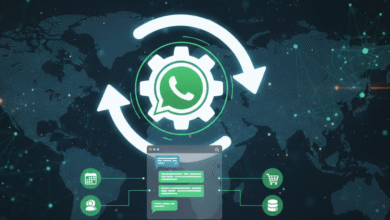
The solution to inconsistent follow up is to integrate the operational heartbeat of WhatsApp with a proper Customer Relationship Management system. This pairing, often called a WACRM, brings structure to the otherwise chaotic flow of WhatsApp conversations. It moves your customer data from scattered chats and notes into a centralized, organized, and actionable pipeline.
The goal of this system is simple: to automate data capture and timely reminders so that human agents can focus entirely on high value conversion conversations. Automation must empower the human element. It is about using technology to facilitate a high touch experience at scale, not replacing the human connection.
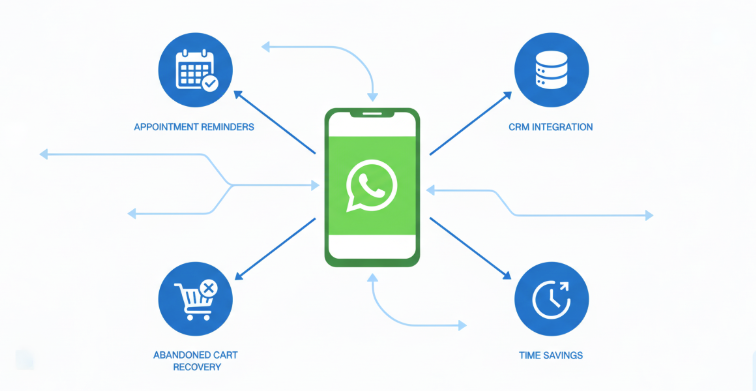
A WACRM provides the necessary features for this task: automated reminders, quick replies for rapid agent response, broadcast messaging capabilities, and effective lead segmentation. By implementing these tools, agents can effectively manage up to three times more inquiries per agent than before.
Key Automation Use Cases
WhatsApp automation can transform several critical areas of your business by deploying targeted, consistent follow up sequences.
1. Lead Qualification and Nurturing
When a potential customer messages your business after seeing an ad or filling a form, the WACRM can instantly engage them. It automatically sends a welcome message and initiates a quick qualification flow. This allows the system to gather essential information such as budget or specific product interest before a human agent takes over. This level of instant customer engagement automates replies and reduces wait times, ensuring no inquiry goes unanswered and prospects stay engaged while their interest is high.
2. Order and Delivery Updates
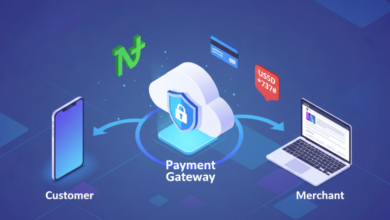
The post purchase experience is a major driver of customer loyalty. Instead of waiting for customers to contact you with tracking requests, you can proactively use automation to send timely updates. These transactional messages can include order confirmations, shipping notifications, and delivery estimates. Automation can also be integrated with local payment solutions to send automated invoices, receipts, and payment reminders.
3. Abandoned Cart Recovery
For e-commerce stores, abandoned carts are a chronic challenge. While traditional email recovery is often ignored, WhatsApp cuts through the noise. Businesses using automated sequences are recovering 15-27% of those lost sales, significantly higher than typical email results. The automation sends a sequence of personalized messages, often starting with a simple check in, followed by a small incentive or urgency cue.
4. Appointments and Service Reminders
Service based businesses, such as clinics, salons, or consultants, lose revenue when clients miss appointments. Integrating your scheduling software with WhatsApp allows the WACRM to automatically send a reminder 24 hours before the appointment, minimizing no shows.
| Automation Type | Primary Business Goal | Example Follow-up Sequence |
| Lead Nurturing | Pipeline efficiency, High conversion | Welcome message > Product catalog link (Day 1) > Offer consultation or custom quote (Day 3) |
| Sales Automation | Revenue recovery, Transaction finalization | Abandoned cart reminder (1 hour) > Discount/Incentive (4 hours) > Urgency reminder (24 hours) |
| Customer Support | Proactive service, Reduced workload | Instant auto reply acknowledging ticket > Link to FAQ/Self service resources > Agent follow up |
| Transactional | Customer trust, Operational efficiency | Order confirmation > Shipping update > Delivery confirmation > Feedback request |
A 5-Step Implementation Roadmap
Implementing a WACRM system does not require advanced coding. It requires clarity and strategy. Start by mapping out a simple plan. If you want to explore the specific tools available for this journey, consider reading Best WhatsApp automation tools for Nigerian SMEs.
Step 1: Achieve Process Clarity
Before investing in any software, the first and most important step is non technical diagnosis. Dedicate the initial phase of your plan to mapping existing processes. Identify your biggest pain points. Are leads being lost? Are agents wasting time on repetitive questions? What specific messages are currently being sent manually? Defining your current state ensures that the automation you build addresses real business problems.
Step 2: Secure Your WhatsApp Business API Access
To enable true automation, multi agent support, and CRM integration, you must move beyond the basic WhatsApp Business App and secure WhatsApp Business API access. This typically involves registering your phone number through an authorized Business Solution Provider (BSP) and having your Facebook Business Manager account and business documents verified. A dedicated BSP makes this process much smoother and faster.
Step 3: Create and Approve Message Templates
WhatsApp restricts proactive messages sent outside a 24 hour window to prevent spam. You must use pre approved message templates for transactional and marketing follow up. These templates must be created in advance and submitted to Meta for review. This process can take between 24-72 hours, so it is wise to create 5 to 10 core templates immediately. Focus on essential templates like order confirmations, shipping updates, and appointment reminders.
Step 4: Map Data and Configure Workflows
This is where the automation truly comes to life. Connect your chosen WACRM platform, like Zoho or HubSpot, with your WhatsApp API account. The critical step here is data mapping: ensuring that customer information captured on WhatsApp automatically updates the corresponding fields in your CRM. For example, a response of “I want to buy” should automatically change a contact’s status from “Cold Lead” to “Hot Lead” in the pipeline. This allows you to track conversions, follow ups, and responses directly within the WhatsApp environment.
Step 5: Test, Launch, and Optimize
Start with a simple automation flow, such as an automatic welcome message. Do not try to automate every process at once. Test the flow repeatedly with internal users to ensure accuracy and natural language. Once launched, monitor key metrics like response times and engagement rates. Automated systems require continuous monitoring and refinement to ensure they remain helpful and do not feel robotic. Good training for your human team is also crucial to ensure consistency in communication when they take over from the bot.
The Measurable Impact on SMEs
The shift to WACRM is not merely a technological upgrade. It is a strategic move that delivers clear, quantifiable results.
By centralizing communication and automating timely notifications, businesses see a drastic reduction in friction across the sales cycle. For instance, response times often drop by 70-80%, which is vital for meeting customer expectations for instant replies. When you engage prospects while their interest is hot, lead conversion rates can increase by 30% or more.
Beyond speed, the clarity gained from the WACRM pipeline allows managers to understand which marketing channels are working and where leads are dropping off. One Lagos real estate agency, after implementing a CRM system that tracked all their WhatsApp inquiries, discovered they could better allocate resources and achieved increased closings by 35% in three months.
In conclusion, manual follow up is a luxury Nigerian SMEs can no longer afford in a hyper competitive digital landscape. By adopting a well designed WACRM system, you achieve consistency, save valuable employee time, and most importantly, you meet customers where they already are, leading to exponential growth and improved loyalty. The time to automate your follow up strategy is now.