

Soon you could be directing a 30-second Star Wars scene from your bedroom…
or animating Mickey and Donald arguing over jollof rice, or creating a brand-new Marvel fight sequence with physics, lighting, and pacing that would’ve taken an entire VFX team weeks. And the wildest part?
This isn’t theoretical anymore. This is the actual direction the entertainment industry is now choosing — aggressively.
The Deal (A Very Different Tone From Two Months Ago)
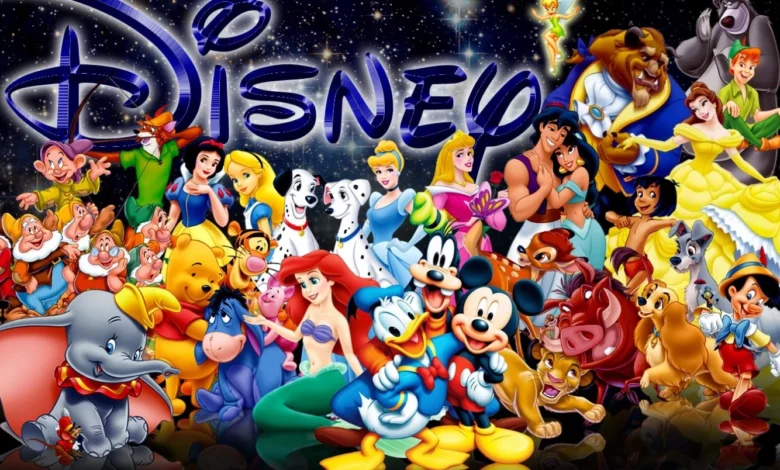
Disney has officially invested $1 billion into OpenAI, signing a three-year licensing agreement that makes it the first major content partner for Sora. That’s not small money. That’s “we’re placing a long-term strategic bet on AI-generated entertainment” money. Just weeks ago, Disney was demanding OpenAI remove all Disney IP from Sora. Today, they’re doing the precise opposite — offering up 200+ characters spanning Disney, Pixar, Marvel, and Star Wars, with tools expected to roll out in early 2026.
This deal gives Disney not only equity but warrants to buy more OpenAI shares later — a clear sign that they expect this partnership to grow in value. On top of that, Disney is becoming a major customer of OpenAI’s APIs. ChatGPT tools will be deployed internally, and curated user-generated Sora content will even appear on Disney+. This isn’t a side experiment, but strategic alignment. Disney is trying to position itself as the company that adopts AI, not the one disrupted by it.
And to be fair, you don’t spend $1 billion unless you believe the ground is shifting under your feet.
The Future of Creativity: A Playground That Never Existed Before
For creators, this is the closest thing to a cheat code we’ve ever had. You don’t just get access to tools — you get access to worlds. You can explore, remix, reinterpret, and experiment with IP that previously lived behind a thousand layers of legal locks. This shift turns creativity into a new kind of economic doorway for any one especially Africans who have notoriously been underfunded.
This shift turns creativity into pure play — and for Africans, that’s a huge unlock. It breaks the old barriers that kept many storytellers on the outside looking in. The line between fan, filmmaker, and full-blown studio is disappearing fast, and that means the next wave of iconic African content doesn’t need massive budgets or foreign backing. It just needs imagination. For Nollywood and the wider African creative economy, this is leverage.
You can prototype films, animate folklore, bring Afrofuturist ideas to life, test out story worlds, build pitch decks with full scenes, and even produce micro-content that feels studio-grade — without waiting for diaspora funding or a big producer to “give permission.” We’re entering an era where ideas outrank resources, and that flips the power structure.
The 19-year-old in Lagos, Nairobi, Accra, Kigali, or Joburg with a laptop becomes more dangerous than a traditional studio with outdated systems. Because now, talent isn’t bottlenecked by equipment, location, or gatekeepers. This is the moment where African creativity can finally scale — not by imitating Hollywood, but by out-imagining it.
Actors: The Strikes Were a Warning Shot

By the time the excitement settles, a more uncomfortable truth sits underneath this announcement — and it’s not theoretical. It’s recent, documented, and everyone in Hollywood remembers it vividly.
Between May 2, 2023 and September 27, 2023, the Writers Guild of America (WGA) staged its longest strike in over six decades, explicitly citing AI as a threat to writers’ livelihoods. Just weeks later, from July 14, 2023 to November 9, 2023, SAG-AFTRA, the actors’ union representing over 160,000 performers, entered its first joint strike with writers since 1960. Their stated fear was simple:
studios wanted the right to scan an actor once and then use their digital likeness forever, without additional pay or control.
This wasn’t conspiracy — it was in black and white.
On July 13, 2023, SAG-AFTRA president Fran Drescher stood outside Netflix headquarters in Los Angeles and said:
“If we don’t stand tall right now, we are all going to be in trouble. They are trying to replace us with machines.”
So when Disney now insists that its OpenAI deal excludes actor likenesses and voices, the statement only addresses the contract — not the trajectory. And certainly not the precedent.
Because the reality is this:
Disney owns the characters.

But the emotional grammar of those characters — their timing, their inflection, their humanity — was built by real people with real names. Who is Donkey in Shrek? if not Eddy Murphy? People like James Earl Jones, who voiced Darth Vader; Idina Menzel, who shaped Elsa; Robert Downey Jr., who defined Tony Stark. Even in cases where rights are legally secured, the cultural ownership is a different conversation entirely.
And that leads to the question the industry still refuses to confront head-on:
If a synthetic version of a performance becomes valuable, who gets paid — the corporation that owns the character, or the human being whose artistry made that character matter in the first place?
Will actors ever get royalties the way musicians get Spotify payouts or creators get Facebook monetization?
Right now?
No.
There’s no mechanism.
But once fans’ AI-generated clips start showing up on Disney+, once the line between “studio content” and “user content” blurs, a new compensation model becomes inevitable.
At some point, a digital performance becomes a performance.
And performances deserve payment.
What Happens Next?
Short-term, the outlook is shaky.
Studios risk losing brand control. Actors fear being replaced. Writers, VFX artists, and animators face existential questions. And Disney could easily misplay this, becoming the next BlackBerry — a giant that underestimated how fast technology shifts the culture. A walled-garden approach to IP could suffocate innovation. Greedy licensing rules could backfire. And if they don’t manage trust, fans could easily rebel. But here’s the flip side — the part history always teaches us:
Every time a new creative technology emerges, it destroys an old model and builds a bigger one.
Netflix proved this.
It tore down the old TV structure and built a global entertainment ecosystem with more jobs, more creators, more diversity, and more opportunities than ever.
AI video can do the same.
Disney may face uncomfortable adjustments, but long-term?
This could lead to an explosion of new stories, new creators, and new ways of interacting with iconic characters.
The future won’t be old Hollywood —
but it might be the most expansive version of entertainment we’ve ever seen.