Budgeting for a business website in Nigeria used to be straightforward. You would call a developer, agree on a price, and wait for the launch. In 2025, however, the economic landscape has shifted. The fluctuation of the Naira against the Dollar has made digital pricing volatile.
Understanding the true cost of a website requires looking beyond the initial design fee. A sustainable digital presence involves five key components: the domain name, hosting, design fees, plugins, and ongoing maintenance.
This guide breaks down the real costs you should expect to pay in 2025. It moves beyond the “friend who can do it for 20k” approach and focuses on professional, reliable business assets.
The Foundation: Domain Names
Your domain name is your digital address (e.g., yourbusiness.com). Prices for domains are relatively stable but are strictly tied to exchange rates or regulatory bodies.
- Global Domains (.com, .net, .org): These are pegged to the US Dollar. As the Naira fluctuates, so does the renewal price. In 2025, you should budget between ₦20,000 and ₦35,000 per year for a standard .com domain.
- Local Domains (.ng, .com.ng): Managing your domain locally through NiRA (Nigeria Internet Registration Association) used to be significantly cheaper. However, price reviews in 2025 have pushed these costs up. A top-level .ng domain now costs approximately ₦15,000 to ₦25,000 per year.
Recommendation: If your primary audience is Nigerian, a .ng domain signals local relevance and can help with local SEO. If you target a global audience, stick to .com.
The Hidden Cost: Web Hosting and Reliability
This is where many Nigerian businesses make a critical mistake. They opt for the cheapest hosting plan available to save money. In a country with unstable power and fluctuating connectivity, “cheap” often results in slow load times and frequent downtime.
eBrand Promotion notes that hosting costs have surged due to their reliance on foreign server infrastructure.
1. Shared Hosting (Entry Level)
This is suitable for personal blogs or very small businesses with low traffic. Your site shares server resources with hundreds of others.
- Estimated Cost: ₦90,000 to ₦252,000 per year.
- Risk: If another site on the server gets a virus or a traffic spike, your site may slow down or crash.
2. VPS and Cloud Hosting (Business Standard)
For serious businesses, relying on shared hosting is risky. The “hidden cost of reliability” means you need a server that can handle traffic spikes without crashing. Virtual Private Servers (VPS) or Cloud hosting provide dedicated resources.
- Estimated Cost: ₦540,000 to ₦2.5 million+ per year.
- Why pay this? PwC data indicates that 81% of digital spend in Nigeria goes toward simply getting online. If a customer uses their expensive data to visit your site and it fails to load, you have wasted their money and your opportunity.
Design and Development Tiers
The fee you pay a developer depends on the complexity of the build. Are they using a template? Are they coding from scratch? Do you need payment integration?
We can categorize professional website projects into three distinct pricing tiers.
Tier 1: The One-Pager / Landing Page
This is ideal for freelancers, consultants, or businesses that just need a digital brochure. It typically includes a Home section, About Us, Services, and a Contact form all on one scrolling page.
- Estimated Cost: ₦500,000 to ₦800,000.
- Key Features: Basic SEO, mobile responsiveness, and WhatsApp chat integration.
- Who is this for: Micro-businesses or specific marketing campaigns.
Tier 2: The Startup Package (5-10 Pages)
This is the standard for most Small and Medium Enterprises (SMEs). It includes separate pages for services, a blog for SEO content, and perhaps a gallery.
- Estimated Cost: ₦700,000 to ₦1.5 million.
- Key Features: Content Management System (CMS) setup (like WordPress), Google Analytics integration, and a mobile-first design strategy.
- Who is this for: Service-based SMEs (law firms, clinics, logistics companies).
Tier 3: E-commerce and Pro Functionality
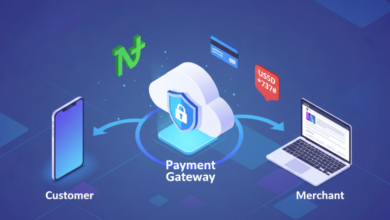
Building an online store requires robust security, inventory management, and payment gateway integration (like Paystack or Flutterwave). According to Mist.com.ng, the complexity here drives the cost up significantly.
- Estimated Cost: ₦1 million to ₦5 million+.
- Key Features: User accounts, shopping carts, database management, and advanced security.
- Who is this for: Retailers, scaling startups, and established brands.
Summary of 2025 Website Costs
| Website Type | Estimated Price Range (NGN) | Ideal For |
| One-Pager | ₦500,000 to ₦800,000 | Freelancers, Lead Gen |
| Startup Site | ₦700,000 to ₦1,500,000 | Growing SMEs, Agencies |
| E-commerce/Pro | ₦1,000,000 to ₦5,000,000+ | Retailers, Large Brands |
| Domain (.com) | ₦20,000 to ₦35,000 / year | Global Reach |
| Hosting (VPS) | ₦540,000+ / year | Reliability & Speed |
Maintenance and “Keep-Alive” Costs
Building the website is only the first step. Keeping it secure and functional requires ongoing investment.
1. SSL Certificates
Security is non-negotiable. While some hosts offer free basic SSL, business sites often require paid validation to display the green padlock and protect customer data. Budget between ₦15,000 and ₦100,000 per year depending on the validation level needed.
2. Technical Maintenance
Websites break. Plugins need updating. Malware needs removing. A “set it and forget it” mentality is dangerous. Most professional agencies offer maintenance retainers. These cover regular backups and security patches.
- Estimated Cost: ₦25,000 to ₦50,000 per month for active maintenance.
3. Content Updates
A static site is a dying site. You need fresh content to rank on Google. This might involve hiring a copywriter or SEO specialist, which is a separate operational cost from the technical build.
The Strategy: Don’t Just Build, Convert
There is no point in spending ₦1.5 million on a website if it does not generate revenue. In Nigeria, the primary communication channel for closing sales is not email. It is WhatsApp.
Many businesses find that while their website informs the customer, the actual deal is closed in a chat. Therefore, your website investment must include tools that bridge the gap between the web browser and the chat app.
Once your site is live and attracting visitors, you need a system to manage those inquiries efficiently. This is where The Best WhatsApp automation tools for Nigerian SMEs becomes a critical part of your digital stack. These tools ensure that the traffic you paid to acquire does not vanish because you were too slow to reply.
Cutting Corners Costs More in the Long Run
The question “How much does a website cost?” is similar to asking “How much does a house cost?” The answer depends entirely on the foundation, the materials, and the size.
For a serious business in 2025, you should set aside a minimum of ₦1 million for the first year. This covers a professional startup site (₦700k), robust hosting (₦200k), and a domain plus security (₦100k).
Cutting corners on hosting or design might save money in the short term, but the cost of lost customers due to a slow or broken site will be far higher in the long run. Prioritize reliability over flashy features.